
December 08, 2025 • 14 min read
December 08, 2025 • 14 min read

Rahul Mondal
Product & Strategy, Ideon Labs
Ever scrolled through social media and wondered, "How much is my competitor spending on ads?" or "What messaging are they testing right now?" You're not alone. Every marketer has tried to peek behind the curtain of their competitors' advertising strategies.
Here's the good news: You don't need to guess anymore. Ad libraries have transformed competitive research from speculation into science.
An ad library is a searchable database of advertisements running across digital platforms. Think of it as a public archive where you can view active and historical ads from any brand, analyze their creative strategies, and understand what's working in your industry—all without spending a rupee on your own campaigns first.
In this guide, you'll discover what ad libraries are, how they work, why they exist, and how marketers use them to gain competitive advantages. Whether you're launching your first campaign or managing million-rupee budgets, understanding ad libraries is essential for modern digital marketing.
Quick Summary: Ad libraries are transparent databases that display current and past advertisements from brands across social platforms. Originally created for political ad transparency, they now help marketers research competitors, discover creative trends, validate strategies, and reduce ad testing costs.\
An ad library is a publicly accessible repository of advertisements that brands and businesses are running (or have run) on digital platforms. These databases contain the ad creative, copy, targeting details, runtime dates, and sometimes performance metrics.
The concept is simple: Instead of ads disappearing into the digital void after their campaigns end, they're archived in a searchable format. Anyone can look up a brand name and see every ad they're currently running or have run in the past.
Key characteristics of ad libraries:
For example, if you wanted to see how Nykaa promotes its seasonal sales, you could search their name in an ad library and view every variation they're testing—different images, headlines, and calls-to-action.
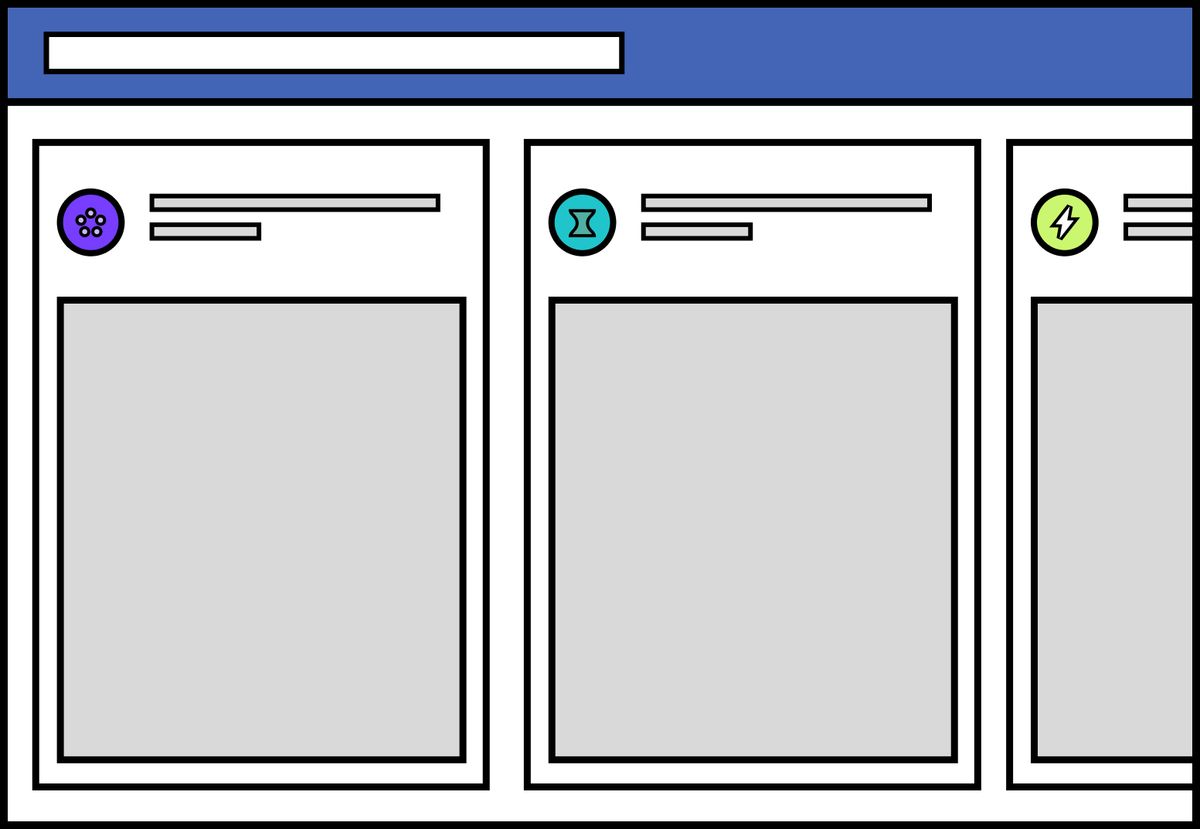
Layout of Meta Ad Library
Ad libraries weren't created for marketers. They were born from political pressure and regulatory requirements.
In 2018, following controversies around political advertising and misinformation on social platforms, Facebook (now Meta) launched its Ad Library to increase transparency. The idea was simple: If political ads can influence elections, the public deserves to see who's paying for them and what messages they're spreading.
The regulatory drivers:
Other platforms quickly followed suit. TikTok, Google, LinkedIn, and others launched their own ad libraries, each with varying levels of detail and accessibility.
While ad libraries were designed for transparency, marketers immediately recognized their value for competitive intelligence. What started as a regulatory requirement became one of the most powerful free research tools available.
Today, ad libraries serve dual purposes: They satisfy regulatory requirements while providing marketers with unprecedented visibility into competitor strategies.
Ad libraries function through a combination of automated tracking systems and platform databases. Here's what happens behind the scenes:
When an advertiser launches a campaign on a social platform, the system automatically logs specific information:
Ad submission: Advertiser creates and submits ad creative with targeting parameters
Approval process: Platform reviews ad for policy compliance
Library entry: Once approved, ad details are added to the public library
Real-time updates: Active status, start dates, and sometimes spend ranges are updated continuously
Historical archiving: Even after campaigns end, ads remain searchable for months or years
The depth of information varies by platform, but most ad libraries include:
Basic information:
Campaign details:
Political/social issue ads get additional scrutiny:
Most ad libraries offer several ways to find relevant ads:
The user experience is straightforward: Enter a search term, browse results, and click through to view full ad details. No special access or technical knowledge required.

Search Filters applied in Meta Ad Library
Ad libraries come in two main categories, each serving different needs:
These are the official, free ad libraries operated by the platforms themselves.
2. Google Ads Transparency Center
These are specialized tools that aggregate data from multiple sources and add advanced analytics.
What makes them different from native libraries:
Tools like Vibemyad and others in the ad intelligence space help marketers monitor campaigns systematically across multiple platforms, though you can also start with free native libraries like Facebook Ad Library to understand the basics.
When to use native vs. third-party libraries:
The level of detail varies significantly depending on the platform and ad type. Here's what you can typically discover:
Creative elements:
Campaign information:
Brand details:
Ads about elections, politics, or social issues receive enhanced scrutiny with additional data:
Ad libraries have important limitations:
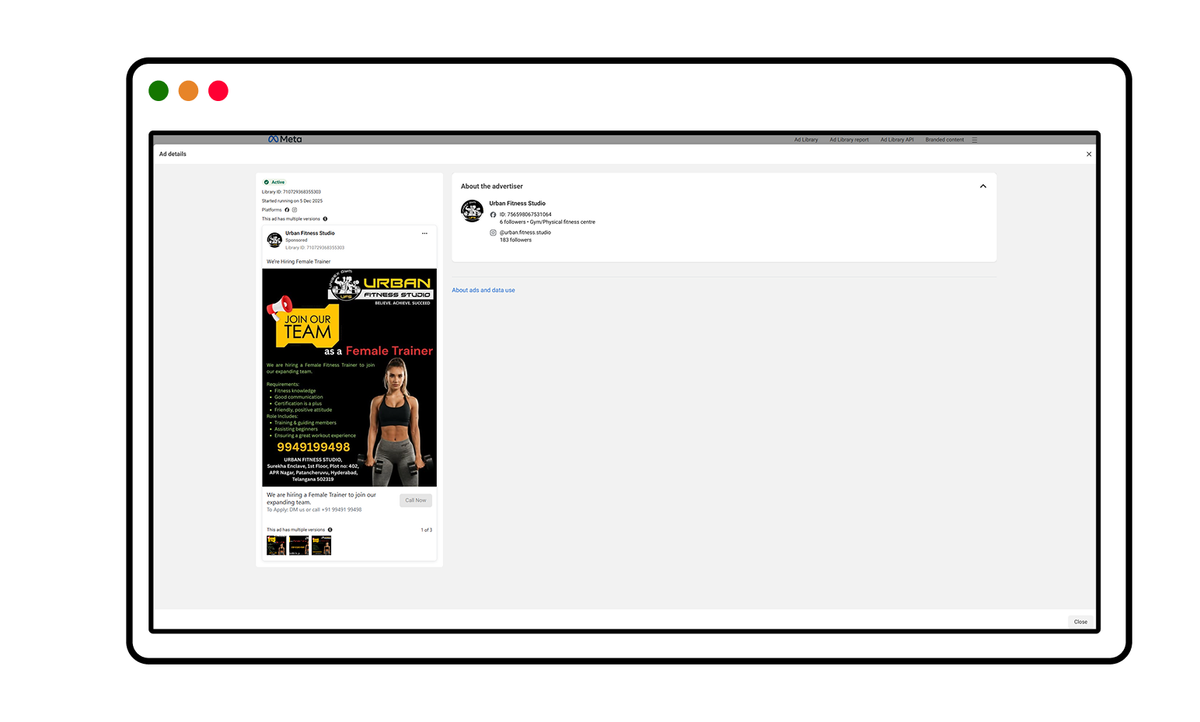
Ad Details | Meta Ad Library
Ad libraries have become essential tools in the modern marketer's arsenal. Here's why thousands of marketing professionals consult them daily:
Simply browsing ads randomly won't deliver insights. Here's a systematic approach:
Start with a clear question:
Focused research questions lead to actionable insights.
Create a research list including:
For example, if you run a premium tea brand in India, research both local competitors like Vahdam Teas and international leaders like Twinings.
Approach your research methodically:
For each competitor, document:
Use a spreadsheet to track patterns across multiple brands. This structured approach reveals trends that casual browsing misses.
Look for commonalities:
Transform research into action:
For campaign planning: Use discovered patterns to inform your creative briefs. If competitors successfully use customer testimonials, incorporate them in your strategy.
For creative development: Share specific competitor ads with your design team as reference points. "Something like this, but adapted to our brand" is clearer than abstract descriptions.
For budget allocation: If competitors run more video ads than image ads, that format likely performs better. Weight your budget accordingly.
For testing hypotheses: Use competitor ads to develop test variations. If they're testing blue vs. orange backgrounds, you can run similar tests.
While ad libraries are powerful, many marketers misuse them:
The mistake: Directly copying competitor ads with minor brand swaps.
Why it fails: What works for one brand may not work for yours. Their audience, positioning, and brand equity differ from yours. Plus, blatant copying damages your credibility.
The better approach: Understand the principles behind successful ads. If a competitor's ad works, analyze why—is it the emotional appeal, the offer structure, or the visual hierarchy? Apply those principles in your unique way.
The mistake: Seeing a competitor run an ad once and assuming it's successful.
Why it fails: Brands test many ads, including ones that fail. An ad running for two days might have been killed for poor performance.
The better approach: Look for patterns over time. Ads that run for months with multiple variations are proven winners. Those are the ones worth studying closely.
The mistake: Only researching established brands with massive budgets.
Why it fails: Their strategies often require resources you don't have. A brand spending ₹50 lakh monthly on ads can afford approaches that won't work on a ₹50,000 budget.
The better approach: Research brands at similar scale to yours. Their constraints match yours, making their strategies more applicable. Also study scrappy challengers disrupting your category.
The mistake: Using ad libraries as a replacement for testing your own campaigns.
Why it fails: Your audience is unique. What works for competitors may not resonate with your specific customers.
The better approach: Use ad library research to inform your testing, not replace it. Develop hypotheses from competitor analysis, then validate them with your audience through structured A/B tests.
The mistake: Only looking at the main creative and missing subtle elements.
Why it fails: Success often hides in details—specific word choices, button colors, or offer framings that make the difference.
The better approach: Analyze ads systematically. Note everything: emoji usage, punctuation choices, whether prices include symbols (₹999 vs. 999), and how offers are structured (20% off vs. ₹200 off).
Ad libraries continue evolving as regulations tighten and technology advances:
Governments worldwide are pushing for more advertising transparency. Expect:
Third-party platforms are integrating artificial intelligence to provide deeper insights:
As marketers run campaigns across multiple channels, demand grows for unified ad intelligence:
The future will balance transparency with privacy protection:
Ad libraries have transformed from regulatory requirements into essential marketing tools:
Whether you're a solo entrepreneur or managing campaigns for major brands, ad libraries give you visibility that was impossible just a few years ago. The playing field has leveled—small brands can now access the same competitive intelligence as agencies with massive research budgets.
Ready to discover what your competitors are really doing? Begin with the free Facebook Ad Library—it's the most comprehensive starting point for social media advertising research.
For deeper insights across multiple platforms with AI-powered analysis and organization tools, explore dedicated ad intelligence platforms. Try Vibemyad free for 7 days to access ads from Facebook, Instagram, TikTok, YouTube, and more in one dashboard—plus get AI-powered ad intent detection and customer journey analysis that native libraries don't provide.
The best marketers don't guess what works. They research, analyze, and apply proven patterns. Your competitive advantage starts with understanding what's already working in your market.
What will you discover in your first ad library search?


Ananya Namdev
Content Manager Intern, IDEON Labs


Rahul Mondal
Product & Strategy, Ideon Labs

Rahul Mondal
Product & Strategy, Ideon Labs
Get notified when new insights, case studies, and trends go live — no clutter, just creativity.
Table of Contents